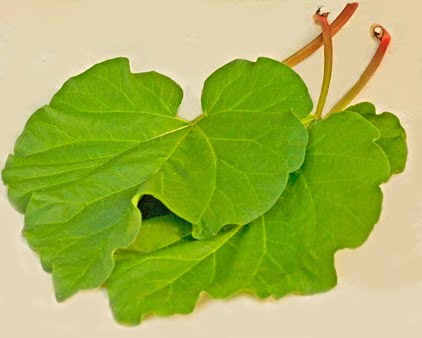
 You’re probably going to think it’s silly, but I have to give you my rhubarb report! My two whole plants are up, and I’m projecting that some stalks will be ready in another month.
 Rhubarb-Strawberry Cobbler
When it comes to pairing rhubarb and strawberries, there are lots of options. This homespun strawberry-rhubarb cobbler is one of my hubby’s favorites, and I love it, too. (For an amazing and amazingly easy strawberry-rhubarb freezer jam that’s been a huge hit with visitors to kitchenlane click here.)
The cobbler is mellowed with a biscuit crust and bursts with bright flavor. The recipe is easy to make and guaranteed to be a hit. (If you’re in the mood for a home-style fruit dessert, but have no rhubarb on hand, try my blueberry-apple crumble instead.)
This recipe is from my Dream Desserts cookbook and the photo was taken by the very talented Marty Jacobs. (My scanned copy really doesn’t do his original justice–sorry Marty!)
Tip: If possible use a casserole or baking dish (I love the antique oven-proof glass casserole in the pic) that can go from stove-top to oven. But if you don’t have one, ready the filling in a large, non-reactive saucepan. Then transfer it to an oven-proof casserole or an extra-large and deep pie plate for the baking.
Generous 3/4 cup sugar, plus more to taste
2 1/2 tablespoons cornstarch
6 tablespoons cranberry juice cocktail, or orange juice
3 cups 3/4-inch pieces fresh rhubarb
1 3/4 cups halved fresh strawberries
Dough
1 1/4 cups all-purpose white flour
2 1/2 tablespoons granulated sugar, divided
1/2 teaspoon baking powder
Scant 1/2 teaspoon salt
2 1/2 tablespoons cold butter, cut into bits
1 1/2 tablespoons corn oil or canola oil
5 tablespoons milk, plus more if needed
Preheat oven to 375 degrees F.
For filling: In a non-reactive 3-quart or larger stove-top and oven-proof casserole thoroughly stir together 3/4 cup sugar and cornstarch. Slowly stir in cranberry juice until well blended and smooth. Add rhubarb; cook over medium-high heat, stirring, just until liquid is thickened slightly and clear. Remove from heat; stir in strawberries. Taste and add more sugar, if desired.
For dough: In a medium-sized bowl, thoroughly stir together flour, 1 1/2 tablespoons sugar, baking powder and salt. Add butter and oil. Using a pastry blender, forks, or fingertips, cut in fat until mixture resembles coarse meal. Add milk to mixture, tossing with a fork just until evenly incorporated; if it seems dry, add a teaspoon or two extra milk. If mixture seems wet, let it stand 5 minutes to reduce stickiness.
Bake in middle third of oven for 35 to 45 minutes or until top is nicely browned and a toothpick inserted in center top comes out clean. Let cool at least 15 minutes before serving.
The cobbler will keep, refrigerated, for up to 3 days. Serve at room temperature or reheated to warm in a low oven.








Leave a Reply